What is pop art?
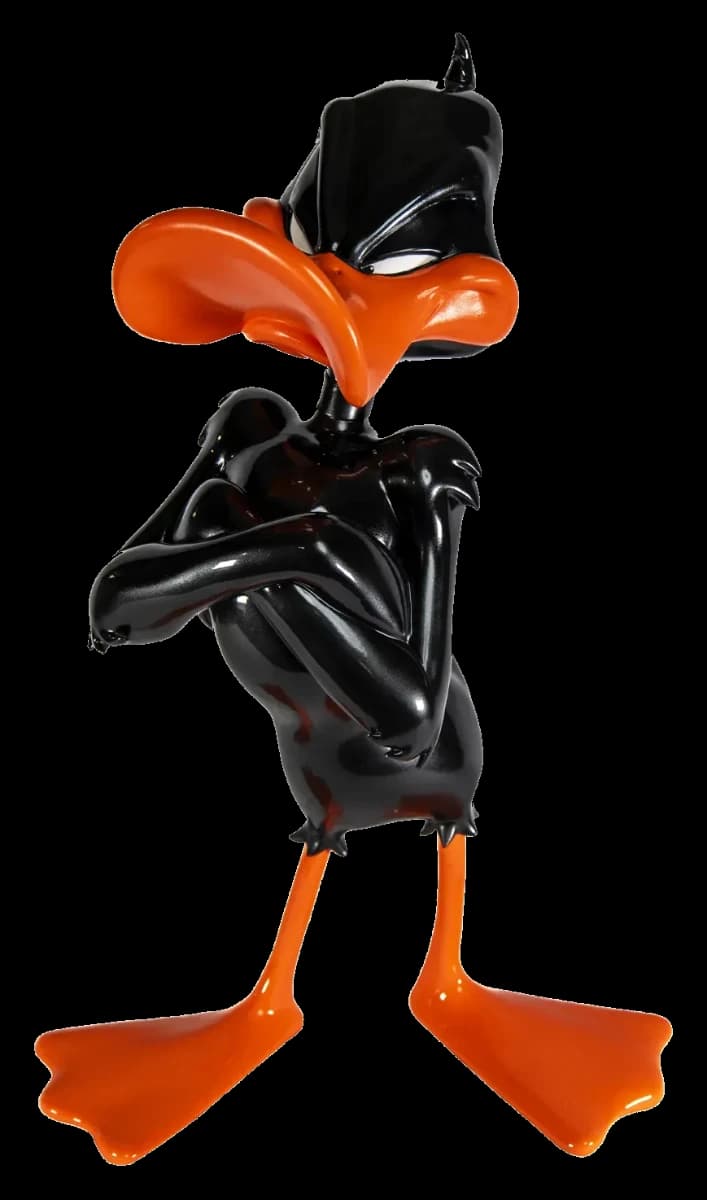 The piece in the picture: Daffy Duck
Pop art is an art movement that emerged in the 1950s and 1960s. It uses images from mass culture, advertising, comics and everyday objects. The name comes from "popular" culture. Pop art questions the line between "high" and "low" art and reflects the consumer society and media of its time.
Key features
- Popular and commercial images: brands, ads, celebrities, comic panels.
- Bright, saturated colours and strong contrasts.
- Clean lines, flat fields of colour and frequent repetition of motifs.
- Irony, sarcasm and sometimes provocation.
- A mix of techniques: painting, printmaking, collage, sculpture, found objects.
Key artists
- Andy Warhol: the Campbell's soup cans, the portraits of Marilyn Monroe, the serial prints.
- Roy Lichtenstein: comic panels and Ben-Day dots.
- Claes Oldenburg: sculptures of giant everyday objects.
- Jasper Johns and other American and British artists who shaped the early movement.
Themes and meaning
- A mirror of, and a critique of, consumer culture and the media.
- Questions of authorship and originality in series and reproductions.
- A play on fame: how the media shape the image of celebrities.
- Art for everyone, in a visual language everybody recognises.
Techniques and materials
- Screen printing, especially with Warhol, for repeated reproduction.
- Acrylic and oil on canvas with flat fields of colour.
- Collage and mixed media, including found objects.
- Sculptures in metal, plastic and foam, often oversized.
Influence
- Pop art changed how we see advertising and visual culture, and influenced graphic design, fashion, music and contemporary art.
- It inspired the idea of the artist as a brand.
- Artists and designers still use its techniques and aesthetics today.
Where to see pop art
- In museums of modern and contemporary art, such as MoMA in New York and Tate Modern in London.
- In galleries, themed exhibitions and private collections.
- In books and online archives.
Tips for collecting
- Originals hold the highest value; limited editions are more accessible.
- Check the provenance, numbering and signature; buy from trusted galleries.
- Think about storage: keep artworks out of direct sunlight.
In short
Pop art is both accessible and provocative, bringing the aesthetics of mass culture into the gallery. Its influence remains strong today, in art, design and everything we see around us.